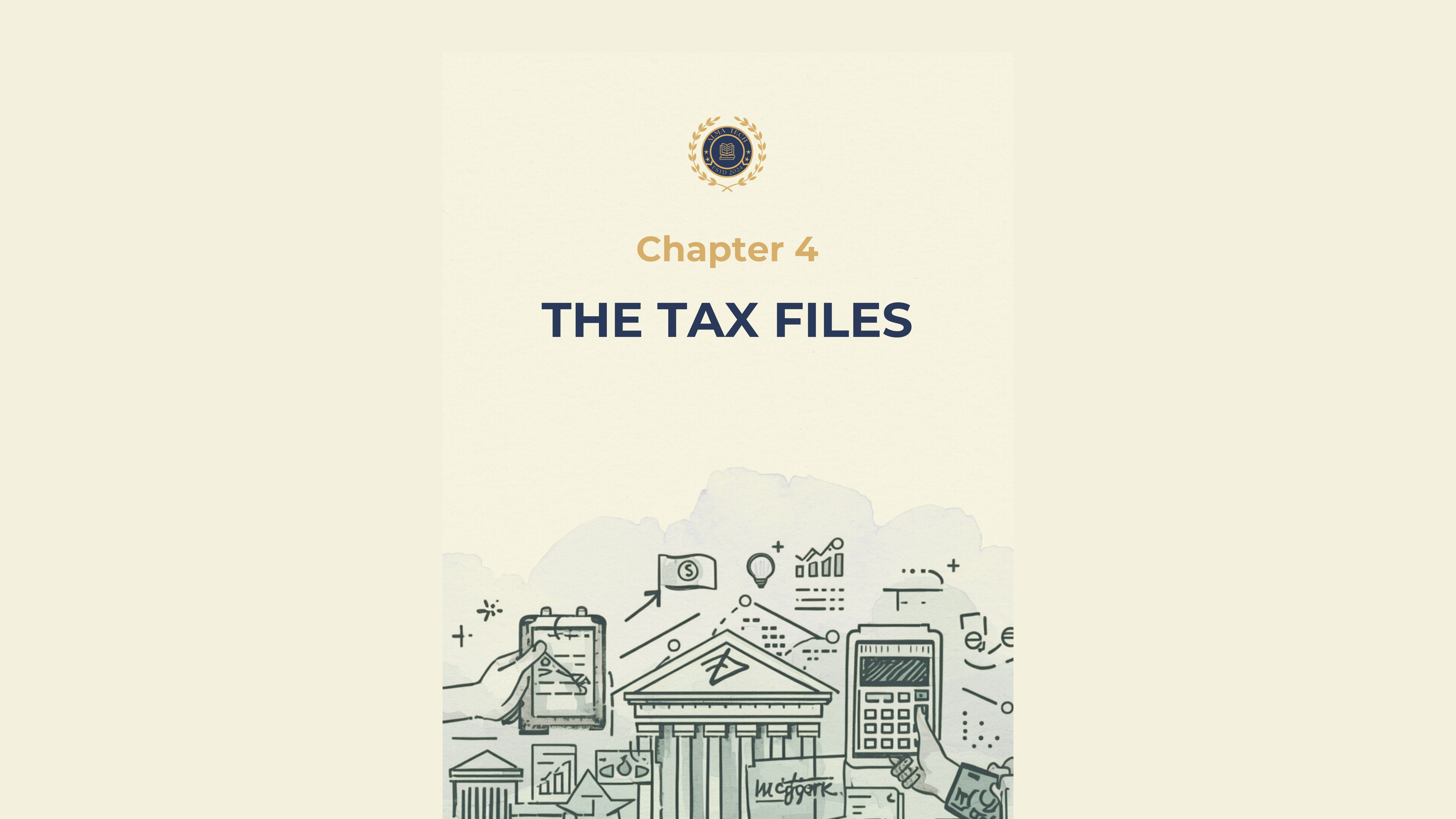
The Tax Files: Understanding the Price of Civilization
If money is the blood of an economy, taxes are the arteries that keep it flowing. Roads, schools, hospitals, defense, sanitation, digital infrastructure — none of these appear magically. Every time a student walks on a public road or streams a government-regulated internet connection, someone, somewhere, paid for that service through tax. Yet most adults grow up fearing taxation, not understanding it. They complain about “cuts” in their salary without realizing they’re contributing to a society they benefit from daily.
The irony is that taxes are taught nowhere in school, leaving teenagers blindly marching into adulthood where forms, slabs, and deductions suddenly dictate their financial decisions. By the time they try to learn, they are already paying penalties for mistakes they didn’t know existed. This chapter exists to prevent that panic — to turn confusion into clarity.
What most beginners see is the surface: income tax, GST, property tax. But beneath lies a deeper structure — different slabs, different buckets of income, exemptions for savings, deductions for medical insurance, rebates for education loans, and penalties for late filings. When understood deeply, taxes stop looking like punishment and start looking like a playbook full of legal shortcuts to keep more of what you earn.
“The hardest thing to understand in the world is income tax.” — Albert Einstein
The greatest investors and entrepreneurs don’t simply earn money — they learn how to protect it. That’s why they choose long-term investments (because taxes get lighter if you hold patiently), claim deductions (because the government rewards responsible investing), and file returns on time (because discipline compounds). A teenager who learns this today could save lakhs across their lifetime — without earning a single extra rupee.
Taxes also shape behavior. Higher taxes on cigarettes encourage health. Lower taxes on electric vehicles promote sustainability. Tax rebates on education loans encourage learning. Through taxes, governments quietly steer society toward values they want to strengthen. Once students recognize this pattern, they can predict economic shifts just by reading policy changes.
But the tax world isn’t always clean. Hidden charges lurk in property registration. Gold investments quietly attract capital gains. Digital wallets track spending habits. Some real estate returns shrink because of stamp duty. Many new investors celebrate profits but forget the final bite — taxes can turn a good return into an average one instantly. Understanding this bite early trains students to evaluate investments realistically, not emotionally.
Then comes compliance – the paperwork dance that scares millennials and baffles parents. Filing returns late can freeze refunds. Misreporting income can create disputes. Ignoring TDS deductions leads to unpleasant surprises later. Most adults panic, but students trained in this chapter learn to approach documentation like detectives: calculating carefully, storing logically, and filing responsibly.
The Tax Files also introduce the global perspective – how government spending affects inflation, why nations borrow, how countries attract foreign investment, and why international corporations pay different taxes in different regions. Students begin to see the world not as random price tags, but as interconnected flows of money responding to policy.
By demystifying taxation, this chapter gives teenagers a skill most people lack well into their thirties: the ability to read a payslip, evaluate take-home salary, identify legal savings, and plan financial moves with foresight instead of fear. They learn that wealth isn’t just what you earn – it’s what you get to keep after the law takes its share.
When these young learners eventually earn their first income, they won’t sigh at deductions or panic at the word “audit.” Instead, they will calculate calmly, plan legally, and save intelligently – long before their peers know what a tax return even looks like.
In the end, The Tax Files isn’t about learning numbers. It’s about understanding responsibility – to yourself, to your family, and to your country. Because taxes, when understood, don’t feel like loss. They feel like contribution. And contribution is the foundation of every strong nation.