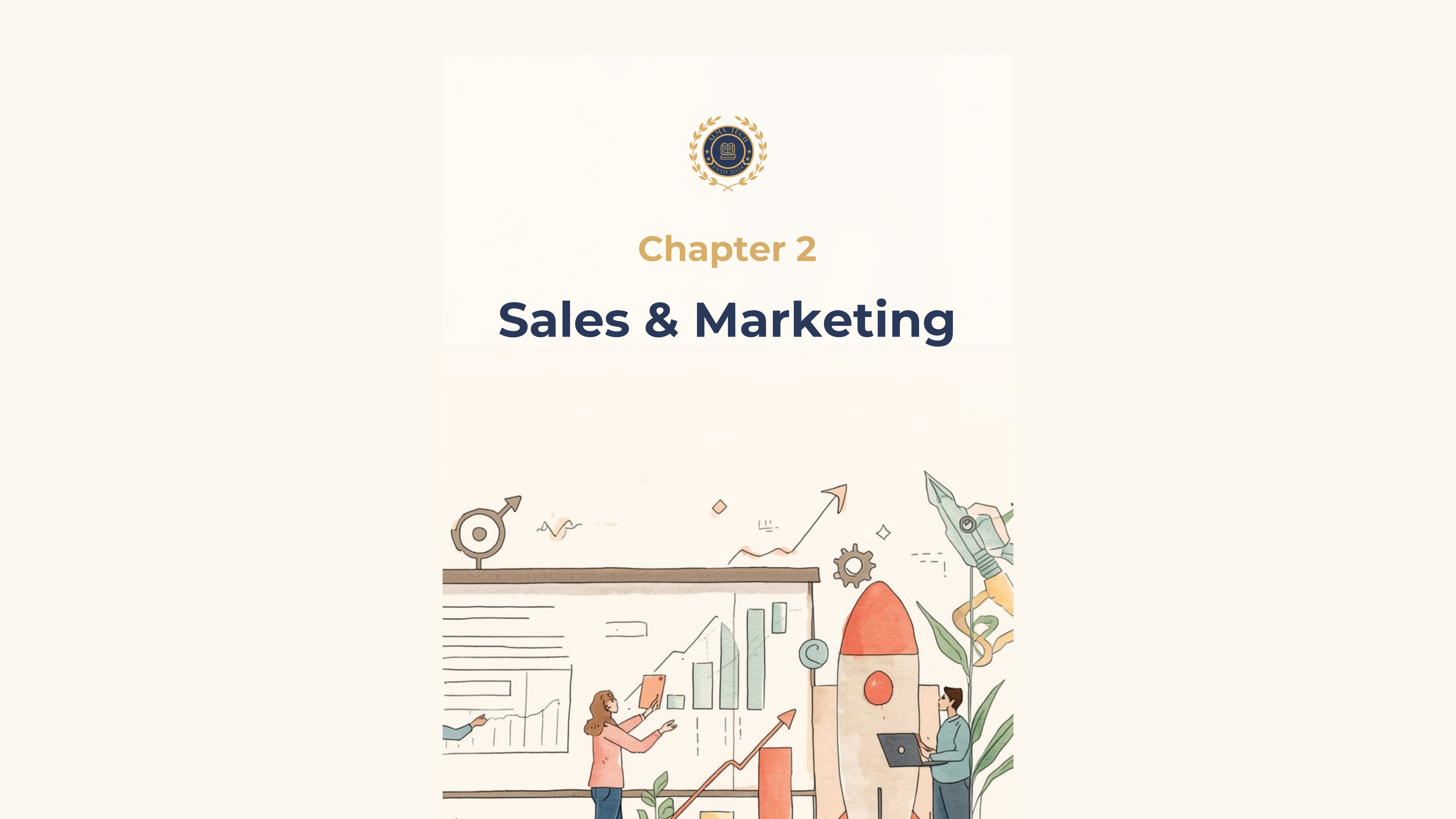
Sales & Marketing: Turning Ideas into Impact
Every business begins with an idea — but it grows through sales and marketing. This chapter introduces students to the real heartbeat of entrepreneurship: understanding people, solving their problems, and creating value that resonates. It transforms the classroom into a live marketplace of ideas, teaching students how to position their product, attract customers, and build long-term trust.
Marketing isn’t just about advertising; it’s about storytelling. Sales isn’t about persuasion; it’s about understanding. Through engaging lessons, case studies, and simulations, this chapter helps young learners see how every successful entrepreneur becomes both a great storyteller and a great listener.
What Students Will Learn
1. Understanding Your Product
Students begin by exploring their own product or idea — what problem it solves, why it matters, and how it stands out. They learn that a good entrepreneur doesn’t just sell a product; they sell a purpose. Activities and examples from brands like Amul, Zomato, and Boat help students see how innovation starts with customer needs.
2. Identifying the Audience
Before you can sell anything, you must know who you’re selling to. Students learn how to identify their target audience, study customer behaviour, and understand market segments. Using real-life examples from companies like Swiggy and Nykaa, they discover how brands shape their message to different people — from teenagers to business professionals.
3. The 3 Ps of Marketing – Price, Placement & Promotion
Marketing strategy is built on three timeless pillars:
Price: How much your product is worth and how much people are willing to pay.
Placement: Where and how your product reaches customers — online or offline.
Promotion: How you communicate value — through advertising, social media, influencers, or word of mouth.
Students work through creative exercises, designing campaigns that show how simple ideas can reach thousands when marketed effectively.
4. How to Sell
Selling is an art of connection. Through role-play exercises and real-world simulations, students learn to approach potential customers, explain value, handle objections, and close deals respectfully. They study examples from India’s top startups and learn how customer experience can make or break a brand.
5. After-Sales Service
The sale isn’t the end — it’s the beginning of a relationship. This section teaches students how great companies retain customers through loyalty programs, consistent communication, and genuine support. Case studies like Tata Motors and Apple show how good service creates lifelong customers.
Learning Experience
Students participate in group discussions, marketing pitch simulations, product-launch activities, and mock sales competitions. Each activity sharpens real-world business instincts — understanding customer psychology, teamwork, persuasion, and creativity. They also analyse marketing failures to learn what not to do — an essential part of business education.
Outcome
By the end of this chapter, students will be able to:
Identify customer needs and design value-based products
Create marketing campaigns and brand messages
Understand pricing strategies and sales psychology
Pitch ideas confidently and handle real-life customer scenarios
Build long-term customer relationships through empathy and trust
Real-World Reflection
From the neighborhood shopkeeper who remembers your favorite snack to the billion-dollar startup founder who launches a new app — sales and marketing drive them all. The only difference is scale, not spirit.
This chapter helps students realise that sales is not manipulation — it’s meaningful connection. Marketing is not just about visibility — it’s about value. Together, they turn ordinary ideas into extraordinary movements.